
How do players make gambling decisions?
Inside the heart and minds of casino players This is a summary, full-content is available to members of the analytical community (Enroll here)
Casino players are predictably irrational — and their quirks follow cultural fault lines. A Western roulette player who just saw five reds will bet black because it "feels overdue," while an Asian player in the same spot bets red to ride the streak. Game preferences split along similar lines — blackjack dominates in the US but barely registers in Macau, and side-bet appetite can swing from 5% to 11% of turnover depending on the market. These aren't random tendencies — they're deeply ingrained patterns that hold up across massive bet-tracking datasets
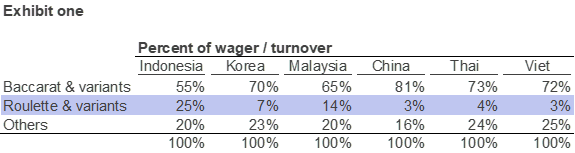
Game preferences from an online Asian casino
What's wilder is how predictable all of this actually is. By factoring in trends on the table, cultural background, and a few basic player features, Differential's models can predict an existing player's next bet with roughly 85% accuracy — and even a brand-new player's bet lands in the 70–80% range.
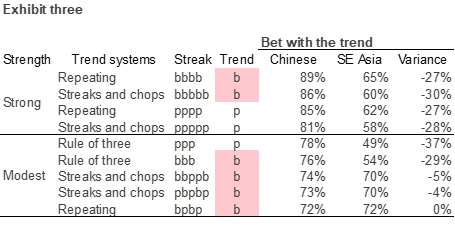
% of players who bet with the trend by nationality; Asian iGaming operator
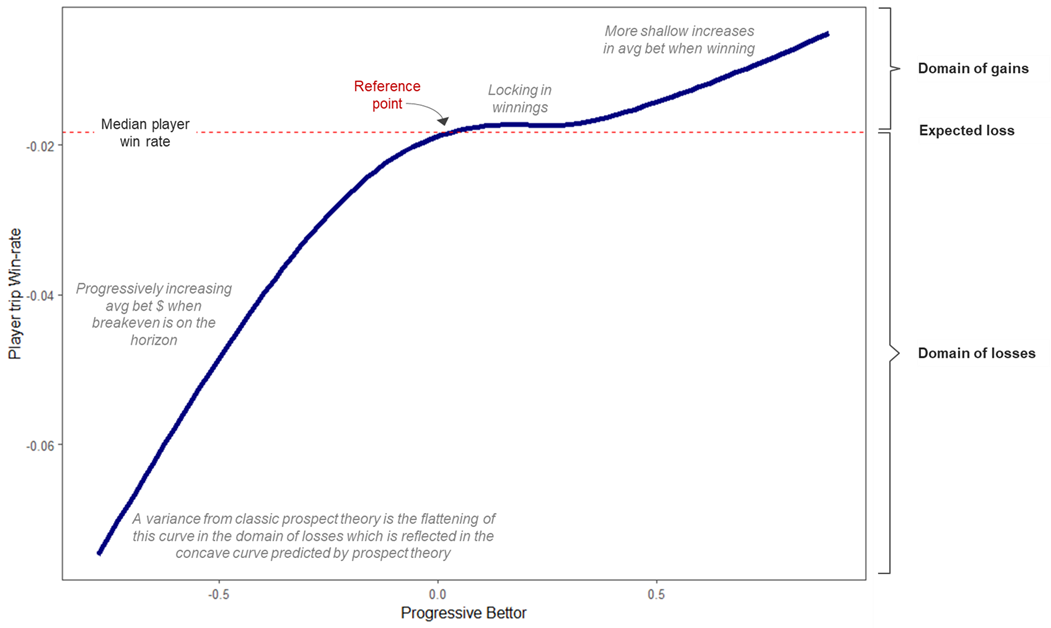
Betting choices stay remarkably stable, but wager size is where things get interesting. Players who are losing tend to chase risk and bump up their bets, while players who are winning get cautious — locking in gains rather than pressing their luck. Classic prospect theory, playing out in real time across millions of hands.
So what's the payoff? If you know what "normal" looks like for a given player, you can spot when something's off — unusual patterns that might signal collusion, chip-dumping, or money laundering. The same behavioral fingerprint that flags a suspicious player can also be flipped around for good — personalizing games and promotions once someone's been cleared. It's a rare case where the same model serves both security and customer experience.
